AI Agent Security

Agentic AI expands your attack surface fast. Achieve complete visibility, governance, and risk reduction.

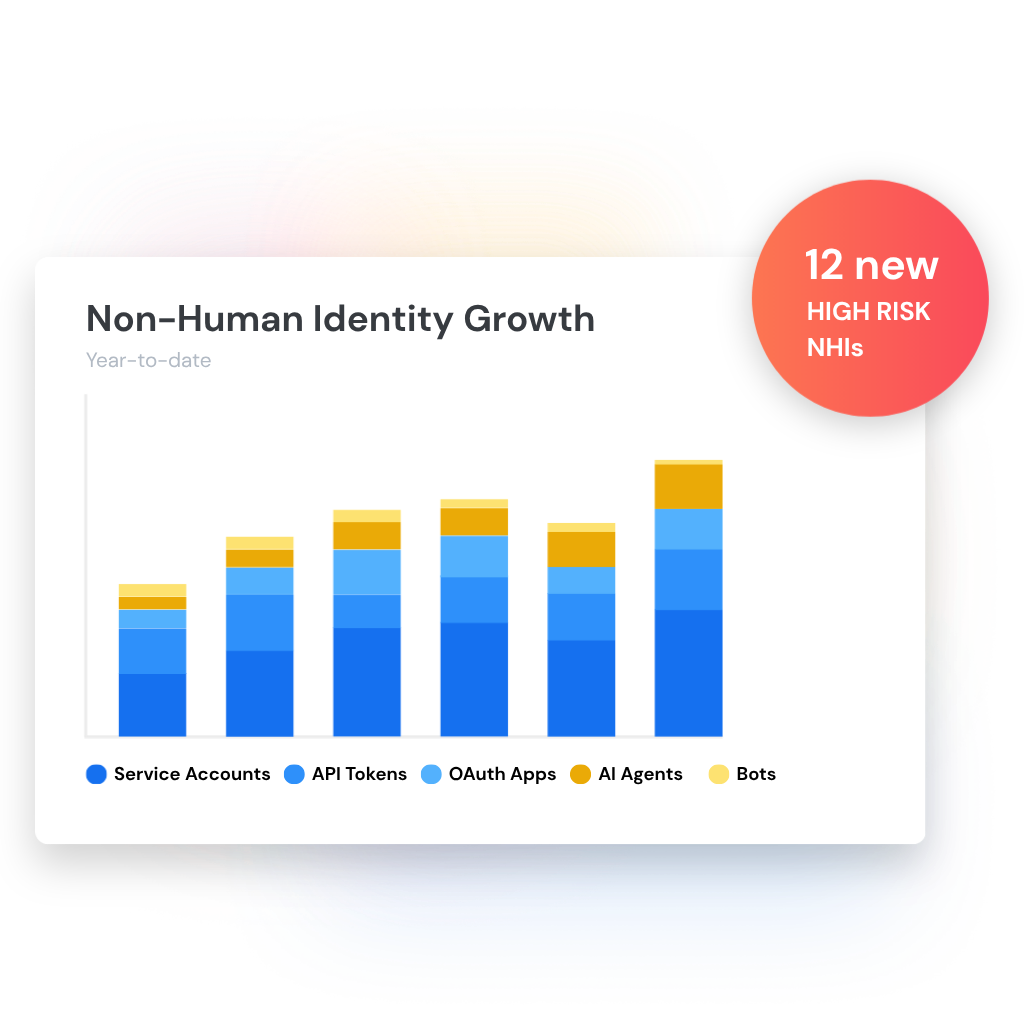
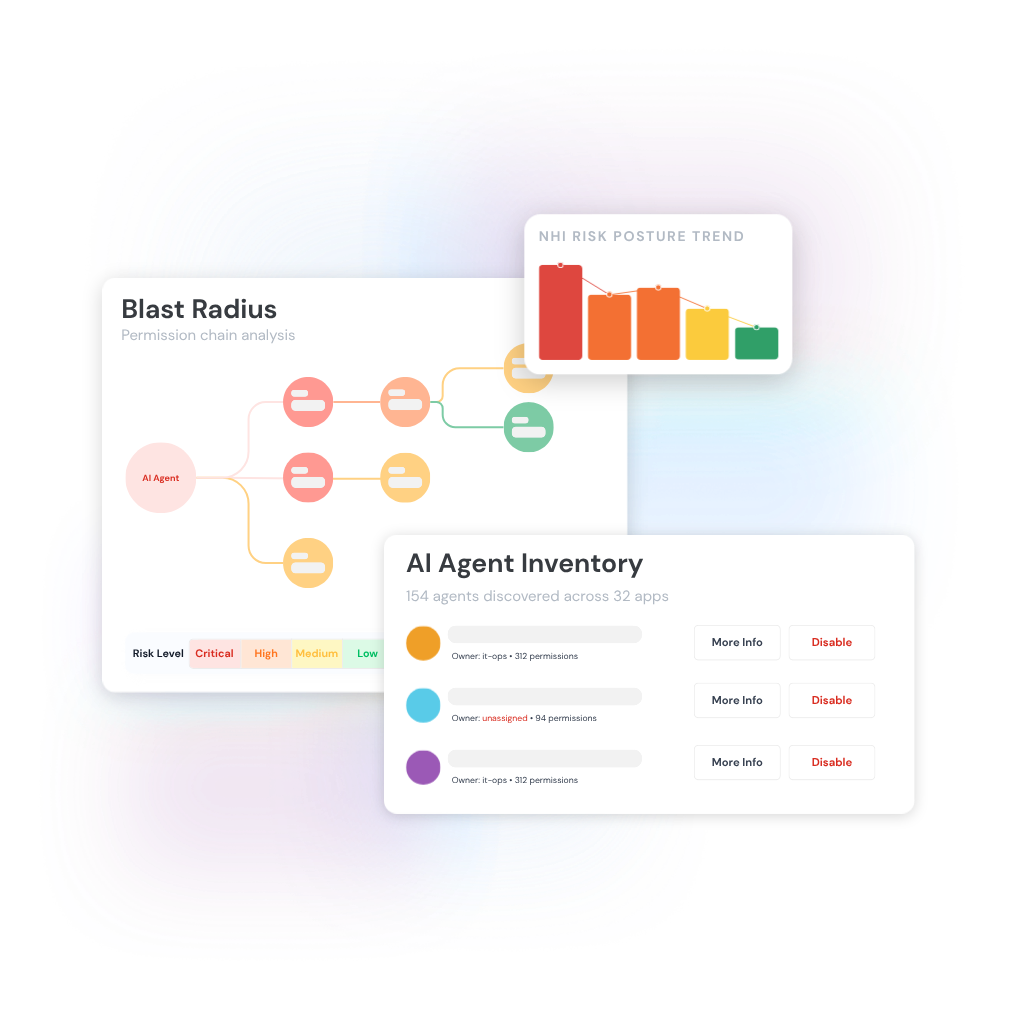
nhi and ai security dashboard representation

Agentic AI Security Requires a New Approach

AI agents behave in ways that traditional identity security wasn’t designed to handle.

Complete AI Agent Discovery

Without a complete picture of what exists and what it can access, governance is impossible and exposure is inevitable.

Discover every AI agent across cloud, SaaS, on-premise, and mainframe environments and bring them into a single governed inventory from day one.

No Owner, No Accountability

No one to notify when risk changes, no accountable party when something goes wrong, and no mechanism to decommission what’s no longer needed.

Surface unowned AI agents in your environment and flag when an agent’s owner has been terminated or is no longer in role, ensuring accountability is a structural piece of your AI security strategy.

Permission Chain Exposure

AI agents are designed to solve problems. Sometimes, that problem means provisioning themselves additional access to achieve the task at hand. The result is a dangerous accumulation of access that wasn’t explicitly approved and no one realizes exists. 

Clarity maps the full permission chain and identifies where in that chain access becomes disproportionate to the agent’s function.

Measurable Risk Reduction

AI security has moved from an engineering concern to a board-level question. Audit committees, examiners, and executive leadership want to know how AI agent risk is being measured, managed, and reduced over time.

Clarity maps your AI security posture against the OWASP Non-Human Identity Top 10 and tracks your risk as you work through remediation, giving leadership a measurable, auditable, and defensible report.

nhi visibility

Every Agent Visible

The foundation of securing AI agents is knowing what you have.

Discover every AI agent in your environment and view a unified inventory with insight on permissions, ownership, usage, and risk. Most organizations are surprised by what they find.

Built-In Accountability

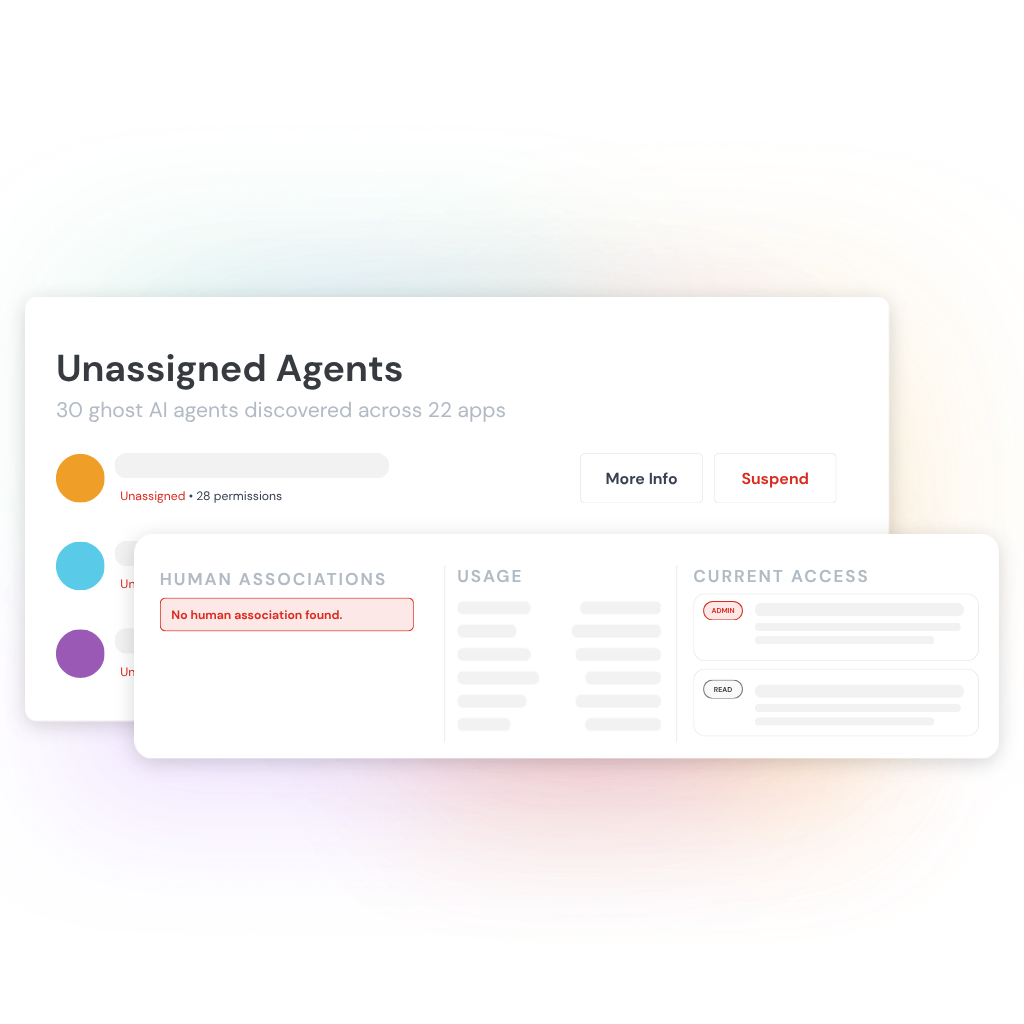
Surface every AI agent that lacks a responsible owner, whether it was never assigned one or the owner has since left the organization.

agent ownership
ai agent

See Where the Risk Lies

Map the full permission chain for every AI agent — every hop, every connected system, every entitlement accumulated along the way.

Targeted remediation plans scope the fix to the right point in the chain, so the exposure closes without disrupting the workflow it supports.

Measurable Risk Reduction

Track AI security posture against the OWASP Non-Human Identity Top 10. Every risk identified comes with a personalized remediation plan tied to a specific OWASP category, so improvement is visible, on a timeline the team controls, and backed by a platform-agnostic framework.

owasp (1)

Full AI Agent Visibility, Governance, and Risk Reduction in One Platform

GAIN FULL CLARITY

The Platform Built for Adaptive Trust

Adaptive Trust is the state where every identity — human, non-human, and agentic — is assessed against what it should have access to, every moment of every day. It’s the answer to a category that has spent years identifying risk without closing it.

THE UPGRADED FOUNDATION

Clarity Aperture

Every deployment starts here. Aperture connects to your environment and immediately goes to work — discovering every identity, scoring every risk, and giving your team a single defensible answer to “who has access to what.” This is how you get to Adaptive Trust.

CAPTURE MORE

Extended discovery, automation, remediation, and governance for service accounts, API keys, bots, and AI agents.

End-to-end identity lifecycle management for humans & non-humans. Custom workflows to eliminate access creep and maintain least privilege.

Compliance-grade reviews for organizations with regulatory mandates. Your team completes them fast while examiners get the evidence they need.

What Security Teams Are Asking About AI Agent Security

What is AI agent security?

AI agent security is the practice of governing AI agents as identities — ensuring every agent is discovered, has an assigned owner, operates with least-privilege access, and is deprovisioned when no longer needed. As AI agents are granted access to enterprise systems, data, and APIs, they become part of the identity attack surface and require the same governance discipline applied to human users and traditional service accounts.

Securing AI agents starts with complete discovery — you need an accurate inventory of every agent in your environment before you can govern any of them. From there, the core disciplines are ownership assignment (every agent has an accountable team or individual), least-privilege access scoping (agents operate with only the permissions their function requires), continuous monitoring for behavioral deviation (intent vs. actual), and formal offboarding when an agent is retired.

AI agents act autonomously — they make decisions and take actions without human review at each step. That autonomy makes ungoverned access significantly more dangerous than a static service account with excessive permissions. An AI agent with standing access to sensitive systems can cause damage at machine speed, without the friction points that slow down a human attacker.

Agent sprawl refers to the accumulation of AI agents across an environment without centralized visibility or governance — deployed by different teams, for different purposes, often without security review. Security teams inherit an unknown number of agents with unknown access and no assigned owners. You cannot govern what you cannot see, and most organizations have far more agents in production than their security program accounts for.

Regulated industries — financial services, healthcare, and critical infrastructure in particular — are increasingly treating AI agent governance as an extension of existing identity and access management requirements. Regulations like GLBA and HIPAA don’t yet name AI agents explicitly, but their access control, least-privilege, and audit trail requirements apply directly to any system identity with access to regulated data. Leading organizations in these sectors are inventorying agents, assigning ownership, and building agent access into their access review and certification programs ahead of formal regulatory guidance, rather than waiting for examiners (or attackers) to find the gap first.

Take a Tour of Clarity

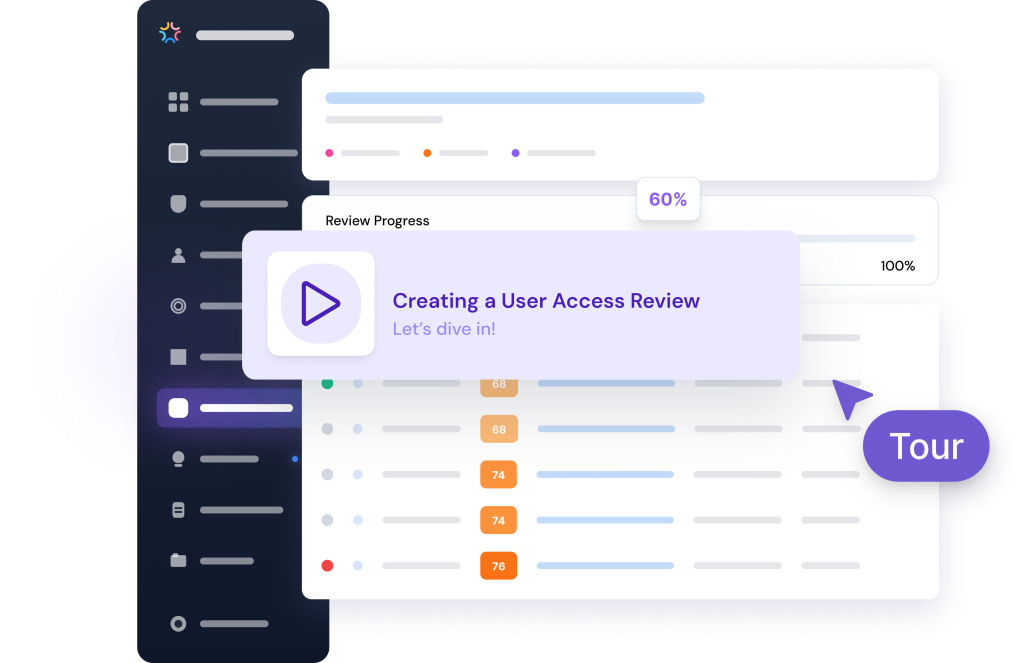
Take an interactive tour to walk through some of Clarity’s key functionalities.

FROM OUR BLOG

Explore More Resources

fy26 webinar series graphics

On-Demand: A Conversation with Mr. NHI

Watch our webinar with Lalit Choda, known as “Mr. NHI,” on non-human and AI identity.